Loading...
Serving San Rafael, CA and surrounding areas(628) 234-2248
San Rafael Concrete serves Richmond homeowners and commercial property owners with concrete driveway replacement, patio construction, slab foundations, and retaining walls matched to the city's varied building stock. From Point Richmond's Victorian-era streets to Marina Bay's waterfront condos, we hold a CSLB C-8 license, pull permits from the Richmond Permit Center, and respond to every inquiry within one business day.
Richmond is a city of about 116,000 residents in western Contra Costa County, sitting on a peninsula with 32 miles of shoreline along both San Francisco Bay and San Pablo Bay. It is the largest city in West County — 16 miles northeast of San Francisco via the Richmond-San Rafael Bridge — and its neighborhoods range widely: the Victorian-era commercial district and original worker cottages of Point Richmond, the wartime-era single-family blocks of the Iron Triangle, the Hilltop district with its grid of 1960s and 1970s tract homes, and the master-planned Marina Bay waterfront development built on the former Kaiser Shipyards site.
The Rosie the Riveter / WWII Home Front National Historical Park anchors Richmond's identity around its World War II shipbuilding era, when the Kaiser Shipyards produced 747 ships and the city's population quadrupled to over 93,000 in three years. That building boom is still visible in the housing stock: compact single-family homes on 25-foot lots in the Iron Triangle and Richmond Annex, with aging driveways and sidewalks that match the era. Marina Bay, developed on the old shipyard footprint, is a different world — 2,100 residential units, a 1,500-berth marina, and a restored ferry terminal at Ford Point where Bay Ferry service resumed in 2019.
Neighboring El Cerrito shares similar postwar residential building stock and clay-soil conditions along the city's eastern boundary, and our crews work the Richmond-El Cerrito corridor regularly. Work in San Pablo to the north involves many of the same older residential driveway and sidewalk replacement conditions we handle throughout Richmond.
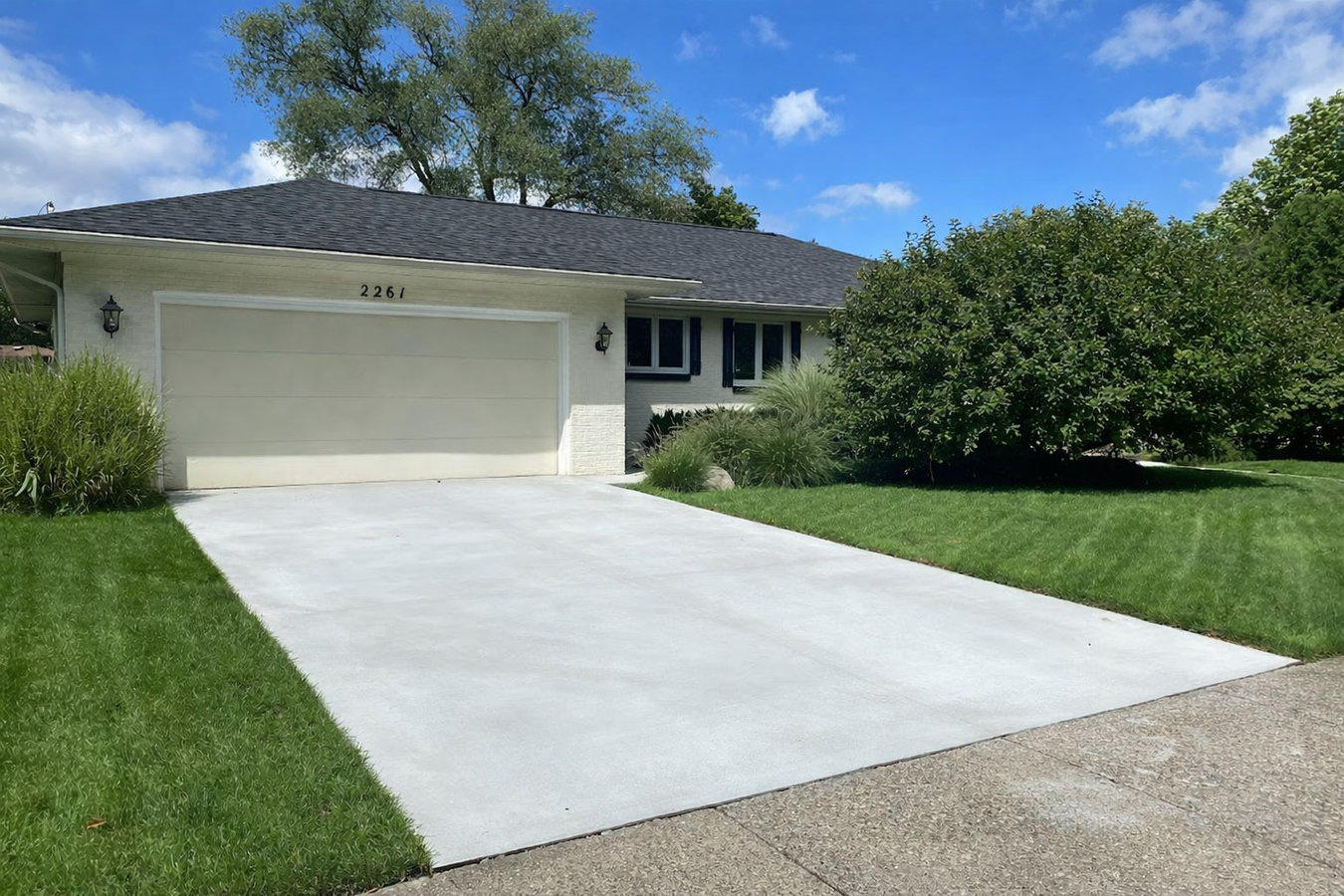
Richmond's 1940s wartime housing neighborhoods have driveways that were poured during or just after the Kaiser Shipyard boom — many have never been replaced and are showing 70 years of clay-soil heaving, root damage, and surface scaling. We excavate and remove the old slab, compact a proper aggregate base, and pour a reinforced replacement that the current code requires. Permit applications go directly to the Richmond Permit Center, and we handle the public right-of-way encroachment coordination.
Our crews work regularly in El Cerrito on sidewalk repairs, driveway replacements, and residential flatwork — pulling permits from the City of El Cerrito Community Development Department and familiar with the tree root encroachment requirements along El Cerrito's street tree corridors. If your property straddles the Richmond-El Cerrito boundary, we handle both jurisdictions in a single project.
Marina Bay homeowners and Point Richmond residents upgrading their outdoor spaces need patios that handle bay-adjacent moisture without scaling or staining. We form patios with built-in drainage slope and apply penetrating silane-siloxane sealers rather than topical acrylics, which peel quickly in Richmond's coastal exposure pattern. Stamped and colored finishes are available for properties where the outdoor area is a primary design priority.
ADU construction and garage conversions in Richmond's residential neighborhoods frequently require new slab foundations that meet current seismic standards for Contra Costa County. We pour slab foundations with vapor barriers, perimeter thickened edges, and the rebar schedules that Richmond's building inspectors verify before covering, keeping your project on schedule through the inspection sequence.
The City of Richmond actively issues sidewalk repair notices in neighborhoods where tree roots and decades of clay-soil movement have caused trip hazards. We repair and replace sidewalk panels in compliance with Richmond Public Works standards, coordinate root barrier placement where the city requires tree preservation, and handle the encroachment permit process from start to city sign-off.
Properties in Richmond's hillside areas — particularly in the Richmond Heights and Laurel Park neighborhoods above the I-80 corridor — need retaining walls that can hold clay-heavy soils through repeated wet seasons. Cast-in-place concrete walls with proper drainage aggregate and weep holes are the most reliable long-term solution for sites where water management behind the wall determines whether the structure lasts five years or fifty.
Richmond's housing stock spans nearly a century of construction, and the challenges a concrete contractor encounters differ block by block. In the Iron Triangle and Richmond Annex — the compact neighborhoods built during the 1940s shipyard boom — most residential driveways and sidewalks are original-era concrete that has never been replaced. These slabs were poured without aggregate bases, on native clay soil, and in many cases without reinforcement. After 70 or more years of Contra Costa County's wet-dry cycles, the clay beneath has expanded and contracted enough times to leave most of that concrete heaved, cracked, or differentially settled.
Marina Bay presents an entirely different set of conditions. The neighborhood was built on the former Kaiser Shipyards footprint along the south shoreline — a site that required significant fill and grading before residential construction could begin in the 1980s and 1990s. Fill soils settle over time, and Marina Bay condominiums and townhomes with driveways or patio slabs over imported fill occasionally see settlement that native-soil properties in Point Richmond do not experience. A contractor who does not ask about site history before pouring can miss this entirely.
Richmond's 32-mile bayfront also means that marine moisture affects concrete on the west and south edges of the city more aggressively than it does in inland East Bay cities. Salt-laden air deposits chlorides on exposed concrete surfaces, which can accelerate corrosion of reinforcement steel over time on slabs that are not sealed. Specifying a low water-cement ratio mix and a quality sealer is standard practice for any bay-adjacent project in Richmond, not an upgrade.
The Richmond Permit Center on Civic Center Plaza processes building permits for all concrete flatwork, and encroachment permits for right-of-way work go through Public Works on a separate track. On projects that touch both the private property and the sidewalk or apron, coordinating both permit tracks simultaneously prevents the delays that come from submitting them sequentially.
We pull permits from the Richmond Permit Center at 450 Civic Center Plaza, and on driveway projects in the Richmond Annex and Iron Triangle we routinely encounter the same block-level pattern: the front apron connecting the driveway to the street is deteriorating faster than the driveway itself because the original concrete at that joint was thinner and poured without a tie bar. When a homeowner calls about a cracking driveway, we check the apron condition in the same site visit because addressing only one while ignoring the other produces a call-back within a year.
Point Richmond's Washington Avenue corridor and the residential blocks around it have streets narrow enough that a standard mixer truck cannot turn around without planning ahead. On projects in the historic Point neighborhood, we coordinate delivery timing during off-peak hours to avoid the bottleneck at the Richmond-San Rafael Bridge approach on Garrard Boulevard, which can delay a concrete truck significantly during commute hours. The Bay Trail runs directly through Miller Knox Regional Shoreline on the south shoreline, and projects near the Point Isabel and Marina Bay waterfront areas require stormwater protection plans that account for the bay-adjacent runoff rules.
Our work in nearby Berkeley to the south involves comparable 1940s-era residential driveway conditions, and crews working in Novato to the north cross the Richmond-San Rafael Bridge regularly, making the same Bay Area bay-moisture specifications standard across our full service area.
Reach us by phone or through the contact form. We respond within one business day and schedule your site visit at a time that works for you — no need to take time off work for the exterior assessment.
We walk the property, evaluate subbase conditions, access for the concrete truck, and permit requirements from the Richmond Permit Center. Your written estimate separates labor, materials, permit fees, and any encroachment permit costs — no single-line quotes that hide line items.
We submit and manage all permit applications, including building and encroachment permits where both apply. Standard residential permits in Richmond typically take one to three weeks. We provide a firm start date once the permit is in hand.
Concrete is placed, finished, and properly cured. We schedule required city inspections and hand you the signed permit card at project close. That document stays with the property and matters at resale.
San Rafael Concrete serves all Richmond neighborhoods — from Point Richmond to Marina Bay — with licensed work, pulled permits, and pricing that is spelled out before a shovel goes in the ground.
(628) 234-2248New driveway pours and full replacements built to handle daily traffic and Bay Area weather.
Learn moreCustom patio slabs designed for outdoor living, entertaining, and lasting curb appeal.
Learn moreDecorative stamped finishes that replicate stone, brick, or tile at a fraction of the cost.
Learn moreADA-compliant sidewalks and walkways poured level, smooth, and built to code.
Learn moreDurable garage floor slabs with optional coatings that resist oil, stains, and wear.
Learn moreStained, polished, and textured finishes that turn plain concrete into a design feature.
Learn morePoured concrete retaining walls that hold slopes, protect landscaping, and last for decades.
Learn moreInterior and exterior slab floors installed flat, reinforced, and ready for finish materials.
Learn moreSlip-resistant pool deck surfaces that stay cool underfoot and look great around any pool.
Learn moreSafe, code-compliant entry steps and stairways built from solid poured concrete.
Learn moreResidential and commercial slab foundations poured with proper reinforcement and drainage.
Learn moreFull foundation installs including footings, anchor bolts, and waterproofing details.
Learn moreCommercial parking lot paving with proper grading, drainage, and long-term durability.
Learn moreStructural footings for fences, posts, retaining walls, and new construction additions.
Learn moreFoundation leveling and raising to correct settlement, uneven floors, and water intrusion.
Learn morePrecision concrete cutting for expansion joints, utility access, and demolition prep.
Learn moreServing these cities and communities.
Whether your driveway dates to the Kaiser Shipyard era or your Marina Bay patio needs a replacement, call now or submit the form and we will be back to you within one business day.