Loading...
Serving San Rafael, CA and surrounding areas. (628) 234-2248
Serving San Rafael, CA and surrounding areas. (628) 234-2248
San Rafael's clay soils and seismic zone mean a slab foundation demands more than a standard pour. We design and build slabs with the reinforcement and soil preparation your project actually requires.
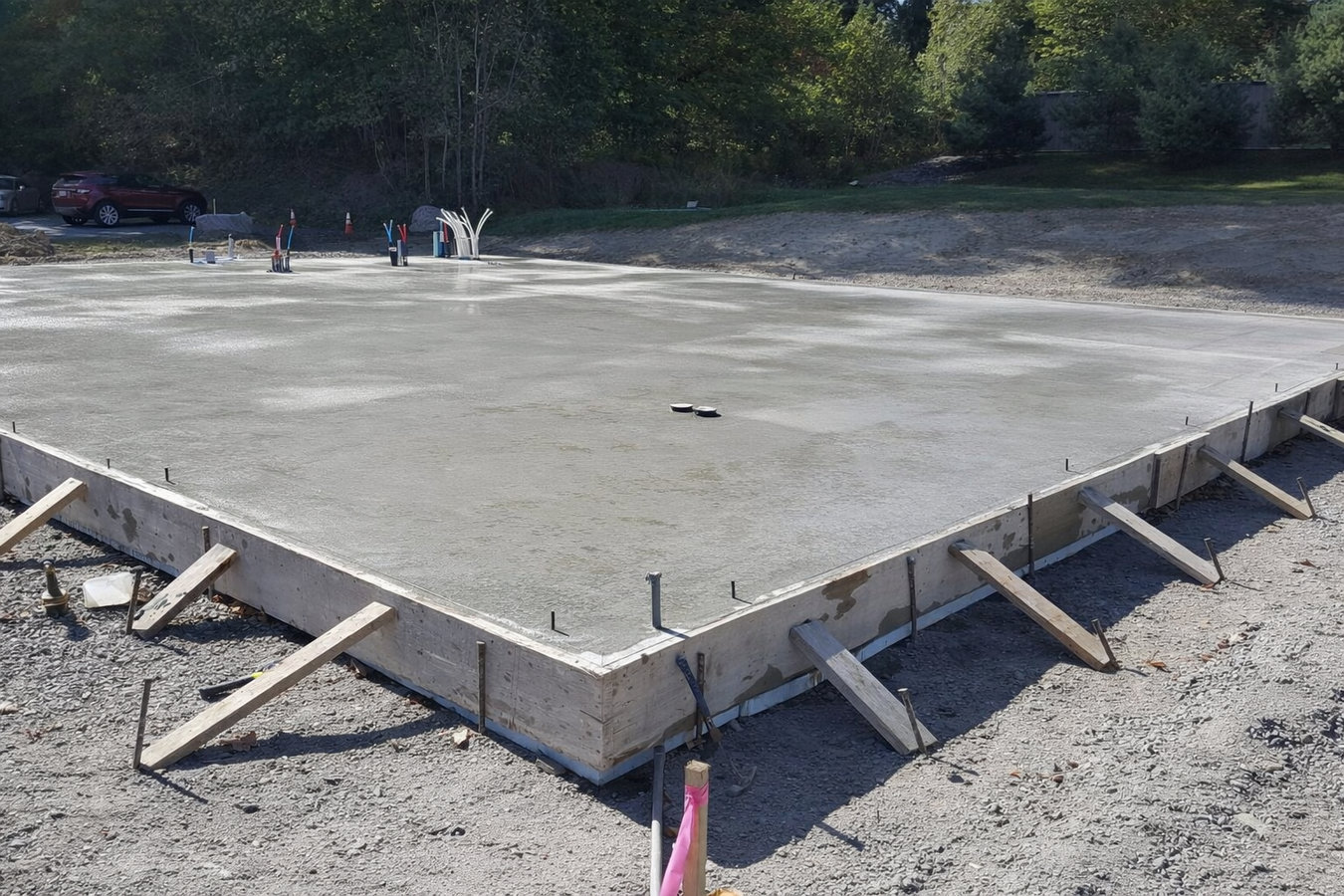
Slab foundation building in San Rafael involves site preparation, gravel base compaction, vapor barrier installation, steel reinforcement placement, and a permitted concrete pour. Most residential projects take three to five days of active work, plus two to four weeks for City of San Rafael permit processing before the crew begins.
A slab is a flat concrete pad poured directly on the ground that serves as both the floor and the structural base of the building above it. There is no crawl space or basement underneath. This design is common throughout California because the mild climate means freeze-thaw heaving is rarely a concern, though San Rafael's clay soils and proximity to active fault lines introduce their own engineering demands that a standard pour does not address.
Whether you are building an addition, converting a garage for an ADU, or starting a new structure on bare ground, the foundation is where every mistake eventually shows up. For projects that also require footings beneath load-bearing posts or walls, our concrete footings service can be combined with the slab work in a single mobilization.
Any new structure, whether a room addition, ADU, garage, or covered patio with walls, needs a foundation before framing begins. Pouring a slab without first addressing soil conditions and permits sets you up for settling, cracking, and failed inspections that are far more expensive to correct after the fact.
Hairline cracks in older slabs are common and often harmless. But cracks wider than a quarter inch, cracks where one side sits higher than the other, or cracks that keep growing are signs the ground beneath is moving. In San Rafael's clay soils, this kind of movement is more common than in areas with stable rocky ground.
Interior doors that stick, swing open on their own, or no longer latch correctly often point to foundation movement. The same goes for floors that noticeably slope in one direction. In older San Rafael homes built before modern seismic and soil standards, this type of settling is not unusual and warrants a professional look.
Many San Rafael homeowners converting garages under California's ADU laws discover the existing slab was only three to four inches thick and was not designed to carry a living space. A contractor should evaluate whether your slab can be used as-is or whether a new, properly reinforced slab is needed before any framing begins.
Every slab project starts with excavation to the correct depth, grading, and thorough soil compaction. The crew then installs a crushed gravel base that provides drainage and a stable platform, followed by a vapor barrier to stop moisture from wicking upward into the finished space. Steel rebar or welded wire mesh goes in next, tied to the engineering specifications your project requires, and wooden forms define the perimeter edges and any thickened sections.
For residential projects in San Rafael, edge thickening is standard practice because of clay soil movement. The concrete pour itself is typically a single day of work: the truck arrives, the crew places and levels the mix, and the surface is finished to the specified texture. Most residential slabs use a smooth or light broom finish unless the space calls for something else.
Control joints are cut or tooled into the surface at intervals to guide any future cracking to predictable locations rather than across the middle of the slab. After the pour, a curing compound or plastic sheeting keeps moisture in the concrete while it gains strength. For projects that will also need structural foundation installation work, such as stem walls or grade beams around the slab perimeter, those elements can be coordinated within the same permitted scope.
Designed to carry the additional load of a living space, with proper thickness and reinforcement for San Rafael's permit requirements.
Matched to the existing home's foundation depth and reinforcement profile so the new section sits level and stable for decades.
Full-scope slabs for new residential structures on cleared lots, engineered for Marin County soil conditions and seismic zone requirements.
San Rafael sits in one of the most seismically active regions in the country, within close range of both the San Andreas and Hayward fault systems. California's building code requires that foundations in this area be designed to flex and hold together during an earthquake, which means more steel reinforcement than comparable work in lower-risk states. Every slab we build here meets the engineering specifications that the City of San Rafael's inspectors review before approving the pour.
Beyond seismic requirements, Marin County's clay-heavy soils are a factor on nearly every lot in San Rafael. This soil expands when it absorbs winter rain and contracts in the dry season, putting cyclic stress on any slab that was not designed for it. In neighborhoods like Terra Linda and the Canal District, where postwar homes sit on flatland soils that have been expanding and contracting for decades, slabs built without proper edge thickening and base preparation show the damage early. The rainy season window, which runs November through April, also affects project timing: concrete poured on saturated or unstable ground produces a weaker slab, so we schedule pours within the dry-season window whenever possible.
We serve homeowners across the region, including in Novato, Vallejo, and Concord, and we carry the same knowledge of Marin-specific soil and seismic conditions to every job.
Call or submit the contact form and someone from our team follows up within 1 business day. We ask a few basic questions about your project type and address, then schedule a free on-site visit at no obligation.
We visit your San Rafael property, assess the slope, soil conditions, and access, and provide a written estimate covering excavation, base prep, reinforcement, the pour, and cleanup. No surprise charges.
We handle the permit application to the City of San Rafael's Community Development Department on your behalf. Processing typically takes two to four weeks. Once approved, we schedule the crew and coordinate any needed inspections.
The crew preps the site, sets forms, places reinforcement, and pours the slab. After curing, we coordinate the city inspection. Once it passes, your slab is ready for framing or whatever comes next.
We respond within 1 business day. No obligation, no pressure - just a straight answer about what your project needs and what it will cost.
(628) 234-2248We submit every required document to the City of San Rafael's Community Development Department and schedule both the pre-pour and final inspections on your behalf. You do not have to track down forms, chase a plan checker, or wonder whether the paperwork is in order.
Marin County's expansive clay soils are a known engineering challenge, and every slab we build here accounts for seasonal ground movement with appropriate edge thickening and reinforcement. A slab designed without that knowledge starts showing damage within a few years.
San Rafael is within close range of both the San Andreas and Hayward faults. We build to the reinforcement specifications that California requires for this seismic zone, verified at the pre-pour inspection. The{' '}American Concrete Institute{' '}standards we follow are the same ones inspectors and engineers use to evaluate the work.
We have completed slab projects for garage-to-ADU conversions across San Rafael and surrounding Marin and Sonoma County cities. If the existing slab is inadequate for a living space, we tell you upfront with a written assessment before any demolition begins.
Every slab project we build in San Rafael starts with an honest look at what is actually under your property, not a one-size-fits-all design. That approach means the foundation you get is matched to your soil, your lot, and the city's inspection requirements, so you are not paying to fix problems five years from now that could have been prevented on day one.
New construction or a demolished structure needs a full foundation system built from the ground up, designed for Marin County soil and seismic requirements.
Learn moreLoad-bearing footings distribute weight from walls and posts into stable ground, and every structural slab project depends on correctly sized footings underneath.
Learn morePermit slots fill up fast as dry season approaches. Call or submit the form now and we will have an estimate at your property within a few days.