
Loading...
Serving San Rafael, CA and surrounding areas. (628) 234-2248
Serving San Rafael, CA and surrounding areas. (628) 234-2248
A cracked, slippery, or poorly drained pool deck is a safety problem and a maintenance headache. San Rafael Concrete builds pool decks that drain correctly, hold up through Marin winters, and give your family a surface that is actually safe to walk on.
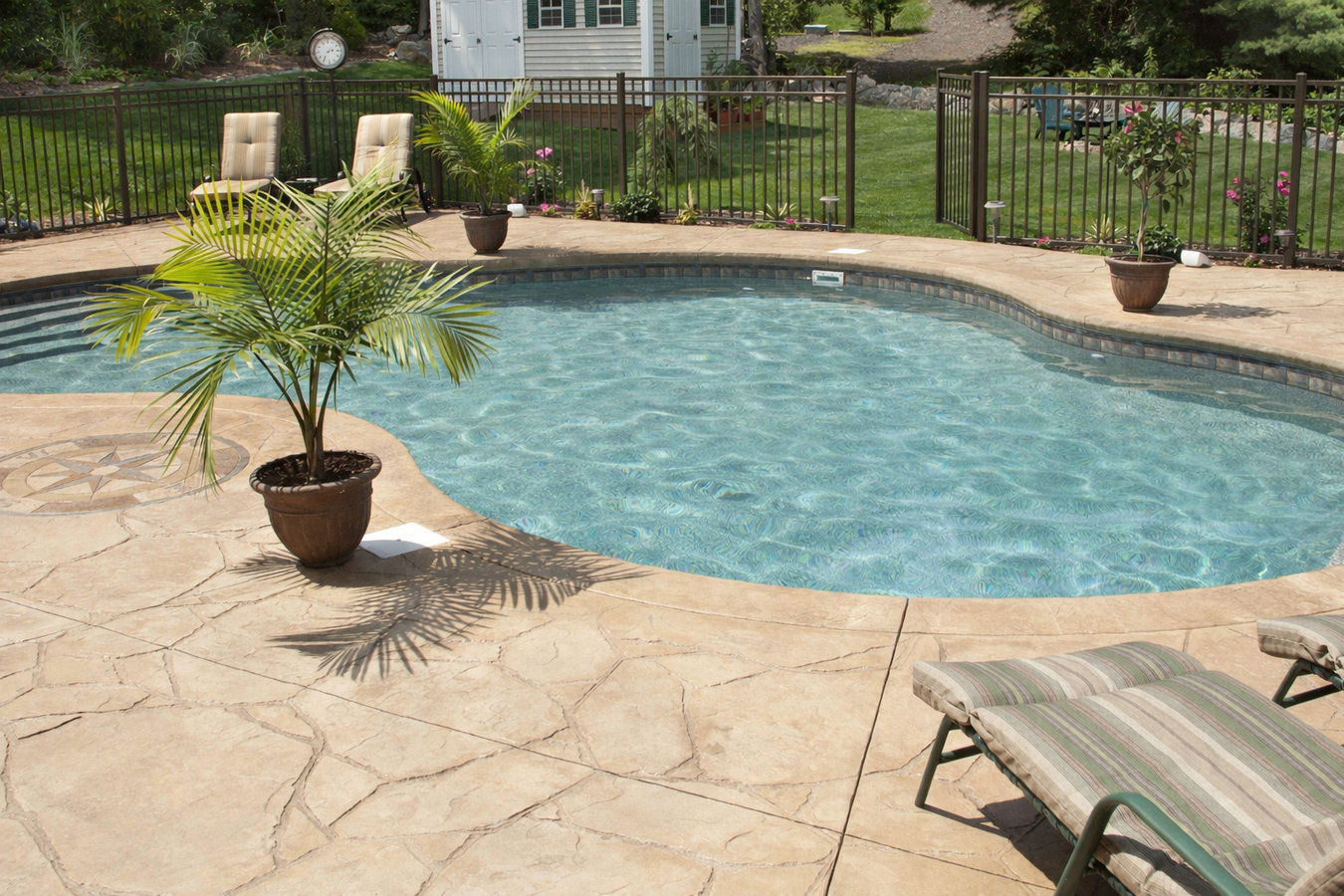
Concrete pool decks in San Rafael involve grading the base for drainage, compacting a stable subgrade, pouring and texturing a durable slab, and pulling the required city permit. Most residential pool decks, roughly 600 to 1,000 square feet, are poured in one to two days with the deck usable within a week.
San Rafael homeowners who have had a pool deck for more than 10 or 15 years often discover that the original drainage was never graded correctly, or that Marin County clay soils have shifted the slab enough to create standing water after every storm. A replacement is also the right time to update a worn or slippery finish that has been a hazard for years. For homeowners who want to tie the deck into a wider outdoor living space, our concrete patio construction service can be coordinated to use the same finish and drainage plan.
If your deck has cracks you have filled before, and they reopened within a season, the slab is moving from beneath. In San Rafael, the clay-heavy soils in many neighborhoods expand with winter rain and shrink in the dry season. Patching a slab in active movement is a short-term fix that delays the inevitable.
Standing water on a pool deck means the slope is no longer directing water away from the pool and house the way it should. This is a slip hazard and a structural problem: pooled water works into cracks and weakens the slab. San Rafael's rainy winters make it worse, leaving a poorly draining deck saturated for days at a stretch.
When the surface layer of concrete begins to flake off, leaving a rough or pitted texture, the deck is breaking down from the top. Pool chemicals, sun exposure, and seasonal moisture all contribute. A deck in this condition is harder to clean, harsher on bare feet, and will continue to deteriorate more quickly than a sound surface.
If any section of the deck sits noticeably higher or lower than the surrounding area, the base has shifted. Tree roots from older San Rafael landscaping, clay soil movement, and inadequate original preparation are common causes. A raised edge or sunken panel is a trip hazard that is easy to miss in the evening and easy to ignore until someone gets hurt.
Every pool deck project starts with a thorough look at the existing surface and the ground beneath it. If demolition is needed, the crew breaks up the old deck, hauls the material away, and grades the soil so water moves away from the pool edge and toward a drain or planted area. That slope is not an afterthought: it is the single most important factor in how long your new deck holds up through Marin County winters.
Once the base is compacted and formed, the concrete is poured and finished to the surface you choose. A standard brushed or broom finish is the most practical choice for pool surrounds, giving bare feet grip in wet conditions. Homeowners who want something with more visual character can choose a decorative concrete finish such as a stamped pattern, exposed aggregate, or integral color, all of which can be applied on pour day while the slab is still workable.
Control joints are cut at regular intervals to guide any future cracking to predictable lines rather than across the face of the slab. Before work begins in San Rafael, we apply for the required building permit through the City of San Rafael Community Development Department and coordinate the city inspection at completion. Permitted work means there is a record on file, which matters when you sell. According to the American Concrete Institute, properly designed drainage and control joints are the two most critical factors in concrete flatwork longevity.
The practical standard for pool decks. Textured enough to grip wet bare feet without being uncomfortable to walk on.
Pressed patterns that replicate stone, slate, or tile. Ideal for homeowners who want the pool area to complement their landscaping design.
A natural-looking surface that reveals the small stones in the concrete mix. Durable, slip-resistant, and common on older San Rafael properties.
San Rafael's Mediterranean climate means most of the year's rain arrives between November and April in concentrated storms rather than spread across all seasons. Concrete poured in wet conditions or during a cold snap cures unevenly and produces a weaker surface. The reliable project window here runs from late spring through early fall, which is also when contractor schedules fill fast. If you want your deck ready for summer pool use, reaching out in February or March gives you the best chance of landing a slot.
Parts of Marin County, including many San Rafael neighborhoods, sit on clay-heavy soils that swell with winter rain and shrink through the dry season. That seasonal movement is one of the main reasons pool decks in this area develop cracks sooner than homeowners expect. Accounting for it requires proper excavation depth, a well-compacted gravel base, and control joints placed before the concrete sets. Skipping any of those steps shortens the life of the deck regardless of how good the concrete mix is.
Concrete pool decks are also non-combustible, which matters in San Rafael's hillside neighborhoods designated as high fire hazard zones by CAL FIRE. Choosing concrete over wood decking around a pool is a practical decision that may be viewed favorably by your insurer. We regularly work on pool decks for homeowners in Novato, Walnut Creek, and throughout the surrounding area, and we apply the same base preparation and drainage standards at every job.
Call or submit the contact form and someone follows up within 1 business day. We ask a few basic questions about your pool area and schedule a free site visit at no obligation.
We visit your property, look at the existing surface and drainage, and provide a written estimate that breaks out demolition, materials, labor, and permit fees separately.
We submit the building permit to the City of San Rafael before work begins. Once approved, the crew demolishes the old deck, grades and compacts the base, and sets the forms.
The concrete is poured, finished to your chosen texture, and protected during curing. We coordinate the city inspection and walk you through the completed deck before we leave.
We respond within 1 business day. Free on-site estimates, no sales pressure, and we handle the City of San Rafael permit process for you.
(628) 234-2248San Rafael Concrete holds an active license with the California Contractors State License Board. You can look up our license number yourself before signing anything. A valid CSLB license means the contractor carries the insurance required to protect your property if anything goes wrong on the job.
We submit the City of San Rafael building permit before any concrete is poured. That means a city inspector reviews the work and signs off at completion. Permitted pool decks show up correctly in your home's permit history, which matters when you sell.
We excavate to the correct depth, compact a crushed gravel base, and cut control joints before the pour. These steps specifically address the expansive clay soils common throughout San Rafael, which are the leading cause of premature cracking in this area.
We have installed pool decks for homeowners in San Rafael, Novato, Petaluma, Vallejo, and eight other cities across the North Bay. That range means we understand how permit requirements, soil conditions, and drainage challenges vary across this region.
Every pool deck we build is permitted, properly drained, and finished to a texture that is safe underfoot when wet. Those are not extras here, they are what the job requires. If you want to see how we approach base preparation or finish work before committing, ask for references from completed projects in San Rafael or Marin County.
Extend your outdoor living area beyond the pool with a concrete patio that uses the same finish and drainage design as your deck.
Learn moreStamped patterns, integral color, and exposed aggregate can give your pool deck the look of natural stone at a lower installed cost.
Learn moreContractor schedules fill quickly once the dry season arrives. Reach out now to lock in your project window before summer.