Loading...
Serving San Rafael, CA and surrounding areas. (628) 234-2248
Serving San Rafael, CA and surrounding areas. (628) 234-2248
Everything above ground depends on what is below it. San Rafael Concrete installs residential foundations designed for Marin County's clay soils, hillside lots, and seismic zone requirements.
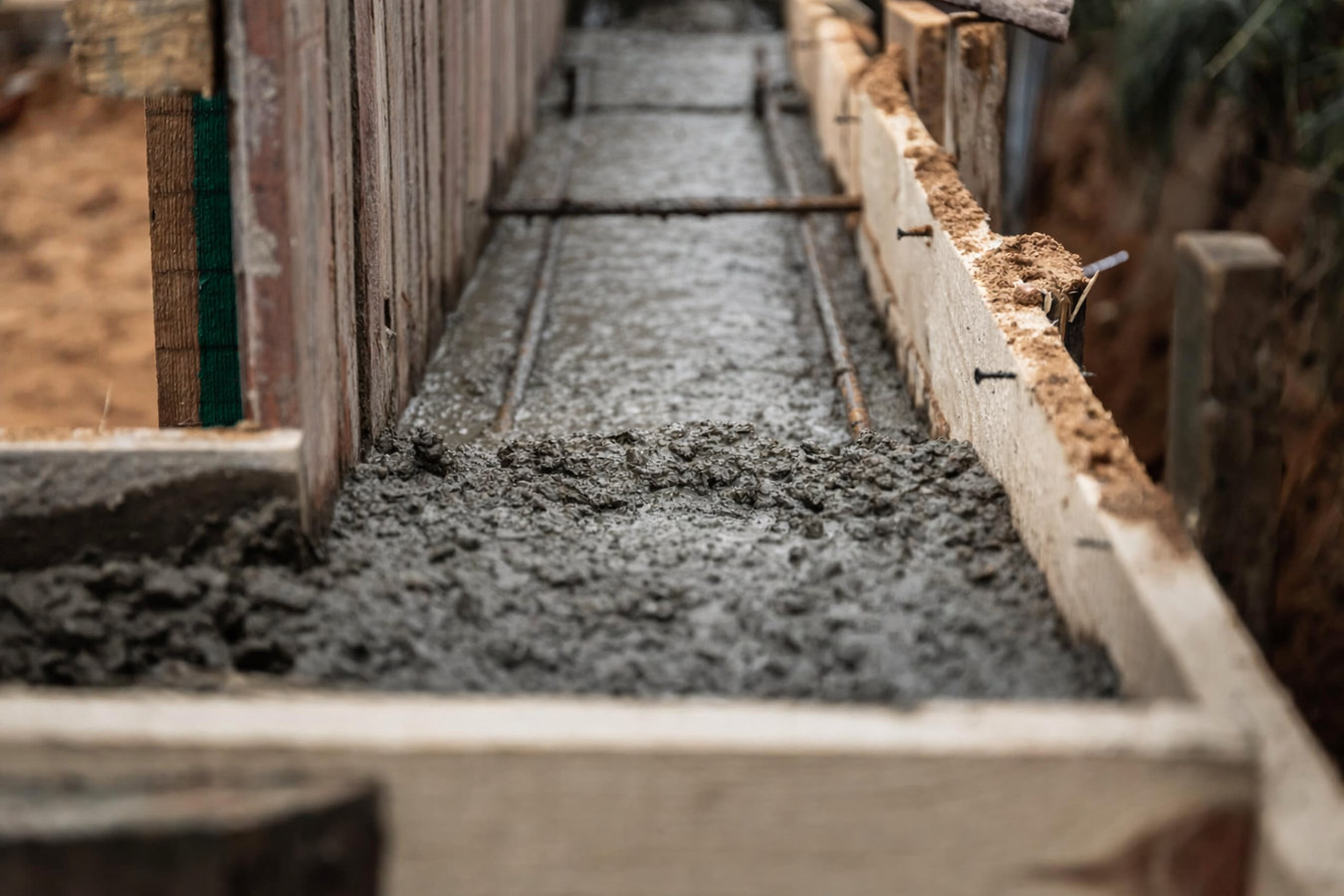
Foundation installation in San Rafael covers excavation, soil preparation, forming, reinforcement placement, the concrete pour, and city permit inspections. Most standard residential foundations take one to two weeks of active work, plus several weeks for City of San Rafael permit processing before the crew can begin.
Your foundation is the structure that transfers the entire weight of your home down into the ground. Without a properly built foundation, walls crack, floors tilt, and doors stop closing correctly. In San Rafael, where clay soils shift seasonally and fault lines run through the surrounding hills, a foundation that was not designed for local conditions tends to show the consequences within a few years.
Most Bay Area homes sit on one of three foundation types: a slab poured directly on the ground, a raised foundation with a crawl space underneath, or a full basement. For new homes and major additions, the right choice depends on your lot's slope, soil conditions, and what you plan to build. If your project includes a concrete slab as the primary floor system, our slab foundation building service covers that scope in detail.
If doors or windows that used to open and close easily have started sticking, dragging, or leaving gaps at the corners, the frame of your house may be shifting. This kind of movement often starts at the foundation. In San Rafael's clay-heavy soils, this symptom tends to appear or worsen after a wet winter as the ground swells and then dries out.
Hairline cracks in concrete are normal as it ages. But cracks wider than about a quarter inch, especially diagonal cracks running from the corners of windows or doors, suggest the foundation is moving unevenly. If you can see daylight through a crack, or if it has grown since you last checked, it is time to get a professional assessment.
Walk through your home and pay attention to whether the floor feels level. Uneven floors in a San Rafael home, particularly in older properties built before modern seismic standards, can point to foundation settling. A ball placed on the floor that rolls without being pushed is a simple way to confirm the slope is real.
If you have purchased land in San Rafael and plan to build, or if an existing structure has been demolished, you need a new foundation before any framing begins. This is the most straightforward trigger, and starting the permit process before finalizing your building plans puts you months ahead of contractors who wait.
Foundation installation begins well before a concrete truck arrives. The process starts with a site assessment, reviewing the soil conditions and slope at your specific address. On hillside properties or lots with soft or clay-heavy soil, that assessment may involve a geotechnical engineer who tests the ground and specifies how deep and wide the foundation needs to be. That report is what the City of San Rafael requires before they approve your permit.
Once the permit is in hand, the crew excavates to the required depth, grades and compacts the soil, and installs any drainage that the design calls for. Forms go in next to shape the foundation's perimeter, and steel rebar is tied inside those forms to the spacing and coverage dimensions in the approved plans. A city inspector visits before the concrete is poured to verify the reinforcement is correct.
The pour itself is typically a single day for a standard residential foundation. After the forms come off and the concrete begins to cure, a final inspection confirms the work meets the approved plans. For projects that will also need foundation raising work on adjacent structures, or where existing grade needs to be corrected before the new foundation can be placed correctly, we scope that work within the same permit where possible.
Flat concrete pad poured directly on prepared ground, suited for additions, ADUs, and new single-story construction throughout San Rafael.
Stem wall and footing systems that create a crawl space beneath the floor, common in older San Rafael neighborhoods and hillside lots.
Engineered solutions for sloped lots requiring retaining elements, deeper footings, and drainage planning beyond a standard flat-lot pour.
San Rafael is located in one of the most seismically active parts of the country, close to both the Hayward and Rogers Creek faults. California requires that foundations in this area be designed to handle earthquake forces, which typically means more steel reinforcement inside the concrete than you would find in a lower-risk state. For some projects, a licensed structural engineer must stamp the plans before the city will issue a permit. This adds time and cost upfront, but it is also why Bay Area homes built to these standards perform far better in earthquakes than older properties that predate these requirements.
Beyond seismic factors, San Rafael's hillside neighborhoods create real logistical challenges. Areas like Dominican, Sun Valley, and the hills above downtown have steep, narrow lots where large concrete trucks cannot always reach the pour location directly. A pump truck is often needed to move the concrete from the street to the site, and that adds to the project cost. The clay-heavy soils found throughout much of Marin County also require more careful preparation than stable sandy or rocky ground, since clay expands when wet and contracts when dry, putting cyclic stress on any foundation sitting above it.
We complete foundation projects across the region, including in Napa, Vallejo, and Petaluma, and we apply the same seismic and soil knowledge to every project regardless of city.
Call or submit the contact form and a member of our team follows up within 1 business day. We ask a few questions about your lot and what you are building, then schedule a free on-site visit to assess the property before quoting.
We visit your San Rafael property, evaluate the soil and slope, and provide a written estimate covering excavation, engineering review if needed, forming, reinforcement, the pour, and cleanup. No verbal-only quotes.
We handle the entire permit application to the City of San Rafael on your behalf, including plan submission and pre-pour inspection scheduling. Permit processing typically takes several weeks, so we start this step as early as possible.
The crew excavates, sets forms, places reinforcement, and pours the foundation. After the city's final inspection passes, your foundation is complete and ready for the next phase of your project.
We reply within 1 business day. No sales pressure, no commitment required for the estimate. Just a straight answer about what your project needs.
(628) 234-2248We handle every step of the City of San Rafael permit process, from initial plan submission through final inspection. You do not need to track down a plan checker, schedule inspectors, or figure out which forms apply to your project. We do that as a standard part of every job.
San Rafael's clay soils and proximity to active fault lines mean every foundation here requires more engineering consideration than a comparable project in a flat, low-risk area. We design to the specifications that San Rafael's inspectors expect, and we have the Marin County track record to back it up.
A significant share of San Rafael's residential lots involve slopes, narrow access, and drainage challenges that most contractors underestimate. We have completed foundation work on hillside properties throughout Marin and Sonoma counties, and we plan access, pump logistics, and drainage before the first estimate rather than after the problems appear.
California law requires any contractor doing work over $500 to hold a valid state license. You can verify our license on the{' '}California Contractors State License Board{' '}website before you sign anything. We pull every permit ourselves and do not ask clients to handle permits on our behalf.
We tell every client upfront what their lot actually requires, not what is cheapest to propose in order to win the bid. That means some estimates we give are higher than a competitor who skips the soil assessment or the engineering review, but it also means the foundation you get will still be performing correctly decades from now.
A slab-on-grade foundation is the most common starting point for ADUs, garage conversions, and room additions throughout San Rafael.
Learn moreWhen an existing foundation has settled or dropped out of level, raising it back into alignment protects the structure above and stops the damage from spreading.
Learn moreSpring permit slots fill quickly. Call or submit the form now and we will schedule an on-site estimate within a few days so you are not waiting when the dry season opens up.