
Loading...
Serving San Rafael, CA and surrounding areas. (628) 234-2248
Serving San Rafael, CA and surrounding areas. (628) 234-2248
Cracked, uneven, or crumbling garage floors get worse every rainy season. San Rafael Concrete removes old slabs, prepares the base for Marin County clay soils, and pours a properly reinforced floor built to stay flat for decades.
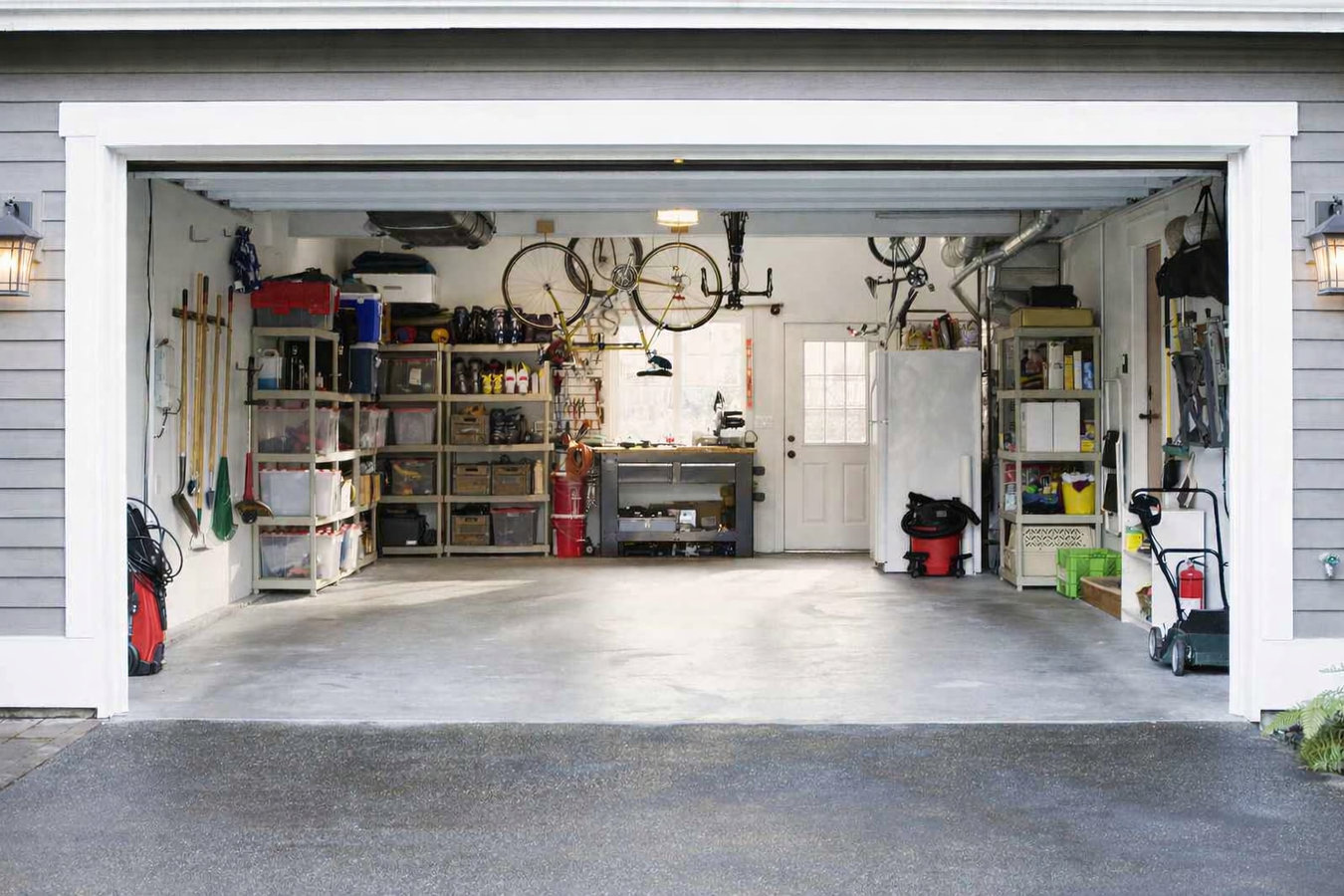
Garage floor concrete in San Rafael involves removing the old slab, compacting a gravel base suited to Marin County soil, pouring fresh concrete at the right thickness, and pulling the required city permit. Most residential projects require one to two days of active work, then seven days of curing before vehicles can return.
A lot of garage floors in San Rafael were poured in the 1950s through 1970s on unprepared ground that has since shifted. Once cracking and settling reach a certain point, patching holds for a season at best. San Rafael Concrete replaces the entire slab from the ground up, addressing the base conditions that caused the original failure.
If you are also planning to update the flooring elsewhere in your home, our concrete floor installation service covers interior slabs for living spaces and commercial areas.
Hairline cracks are common and often harmless. But cracks you can fit a quarter into, or ones you have filled before and watched reopen, mean the slab is moving in a way that patching cannot fix. In San Rafael, this pattern usually means the clay soil underneath is swelling and shrinking with each wet and dry cycle, putting stress on the slab from below.
If puddles form in low spots after a rainstorm, the slab has settled unevenly. In San Rafael's wet winters, standing water on a garage floor accelerates surface damage and can eventually work its way under the slab, compounding the problem. A new pour with correct grading directs water away from the start.
When the top layer of your garage floor chips off in small flakes or breaks apart underfoot, the surface has begun to deteriorate past the point where sealing helps. This often happens on older slabs that were never sealed, especially where moisture from the ground or wet cars has worked into the concrete for years.
If your car rocks as you pull in, or if you can see a visible slope or hump when you look across the floor, the slab has shifted. This is common in San Rafael homes built in the 1950s through 1970s, where original slabs were poured on unprepared bases. An uneven floor also puts stress on garage door tracks over time.
Every garage floor project we take on in San Rafael starts with a full assessment of what is happening beneath the current slab. If the soil has shifted, that problem needs to be fixed before any new concrete is poured. On the day of demolition, the crew breaks up and removes the old slab, hauls the debris away, and then grades and compacts the base. In Marin County's clay-heavy ground, this step is where corners are most often cut on lower-quality jobs, and it is the single biggest factor in how long the new floor lasts.
Once the base is ready, we pour the new slab at the correct thickness for residential use, typically four inches for standard passenger vehicle loads, and place reinforcement through the slab to hold it together if any cracking occurs. Control joints are cut into the surface to give future cracks a predictable, straight path rather than a random one across the middle of the floor.
For homeowners who want to take the upgrade further, we can coordinate an epoxy or penetrating sealer application after the concrete has reached full cure, which protects the surface from oil stains, moisture, and the general wear of a working garage. If you are updating both the garage floor and the driveway at the same time, pairing this work with our concrete driveway building service can simplify scheduling and reduce mobilization costs.
The right choice when the existing floor is cracked, uneven, or sitting on a compromised base. Complete removal and new pour.
For floors that are structurally sound but showing surface wear. A bonded overlay restores a clean, even finish without full demolition.
Applied after the concrete has fully cured. Protects against oil stains and moisture and extends the floor's functional life.
San Rafael and the surrounding Marin County sit on expansive clay soils that swell when they absorb rain and contract as they dry out. That seasonal movement is one of the primary reasons garage floors in this area crack faster than in regions with more stable ground. A slab poured on an improperly prepared base in this soil will likely show stress fractures within a few years, no matter how good the concrete mix was.
San Rafael averages around 37 inches of rain per year, most of it falling between November and March. Pouring concrete in wet conditions weakens the finished surface, so experienced local contractors schedule garage floor work in the dry months from roughly April through October. Timing your project for the spring or early summer window also means the floor has the full dry season to reach maximum strength before winter rains arrive.
Many of the homes we work on in San Rafael were built in the postwar era, especially in Terra Linda and Sun Valley, where ranch-style houses with attached garages are common. Original slabs in these homes were often poured thin and without reinforcement, and after 50 or more years of seasonal soil movement, replacement rather than repair is usually the honest recommendation. We also serve homeowners throughout Novato and Petaluma, where similar soil and housing-stock conditions apply.
California requires all concrete contractors to hold a current license from the Contractors State License Board before performing work on a home. You can verify any contractor's license on the CSLB website in about two minutes, and it is worth doing before you commit to anyone.
Reach out by phone or through the contact form and someone follows up within 1 business day. We ask about your garage size, current floor condition, and any water or drainage concerns.
We come to your San Rafael property, inspect the existing slab and the soil conditions, and give you a written estimate covering demolition, base prep, the pour, and cleanup. No obligation.
We submit the permit to the City of San Rafael's Building Division before any work begins. Once approved, clear the garage completely, vehicles, tools, and shelving, and the crew starts demolition.
The crew removes the old slab, prepares the base, pours and finishes the new concrete, and cuts control joints. After seven days of curing, we do a final walkthrough and confirm the floor is ready for use.
We respond within 1 business day. Written estimates, no pressure, no obligation.
(628) 234-2248We excavate to proper depth and compact a crushed gravel base designed for expansive clay soils before a single bucket of concrete is mixed. This is the step that separates a floor that lasts from one that cracks within a few seasons.
Every slab replacement in San Rafael that requires a City of San Rafael Building Division permit gets one, and we handle the application as part of the job. Permitted work is inspected, documented, and clean when you sell your home.
San Rafael is one of the most expensive construction markets in the country. You get a written quote covering demolition, disposal, base prep, the pour, and cleanup before anyone picks up a tool. The price in the estimate is the price you pay.
We work throughout Marin, Sonoma, Napa, and Contra Costa counties and understand the soil conditions, permit offices, and scheduling windows in each area. Local experience means fewer surprises on your project. For concrete standards we follow{' '}American Concrete Institute guidelines.
Every one of these points comes down to a single idea: the work should hold up, and you should know exactly what you are paying for before it starts. San Rafael Concrete has been doing garage floor and concrete work in this area long enough to know which details matter and which are just talk.
Interior concrete floors for living spaces, basements, and commercial areas, finished and sealed for daily use.
Learn moreReplace a cracked or uneven driveway with a properly permitted slab built to handle Marin County soil conditions.
Learn moreDry-season booking slots fill fast. Reach out now to lock in your start date before fall rains return.