Loading...
Serving San Rafael, CA and surrounding areas. (628) 234-2248
Serving San Rafael, CA and surrounding areas. (628) 234-2248
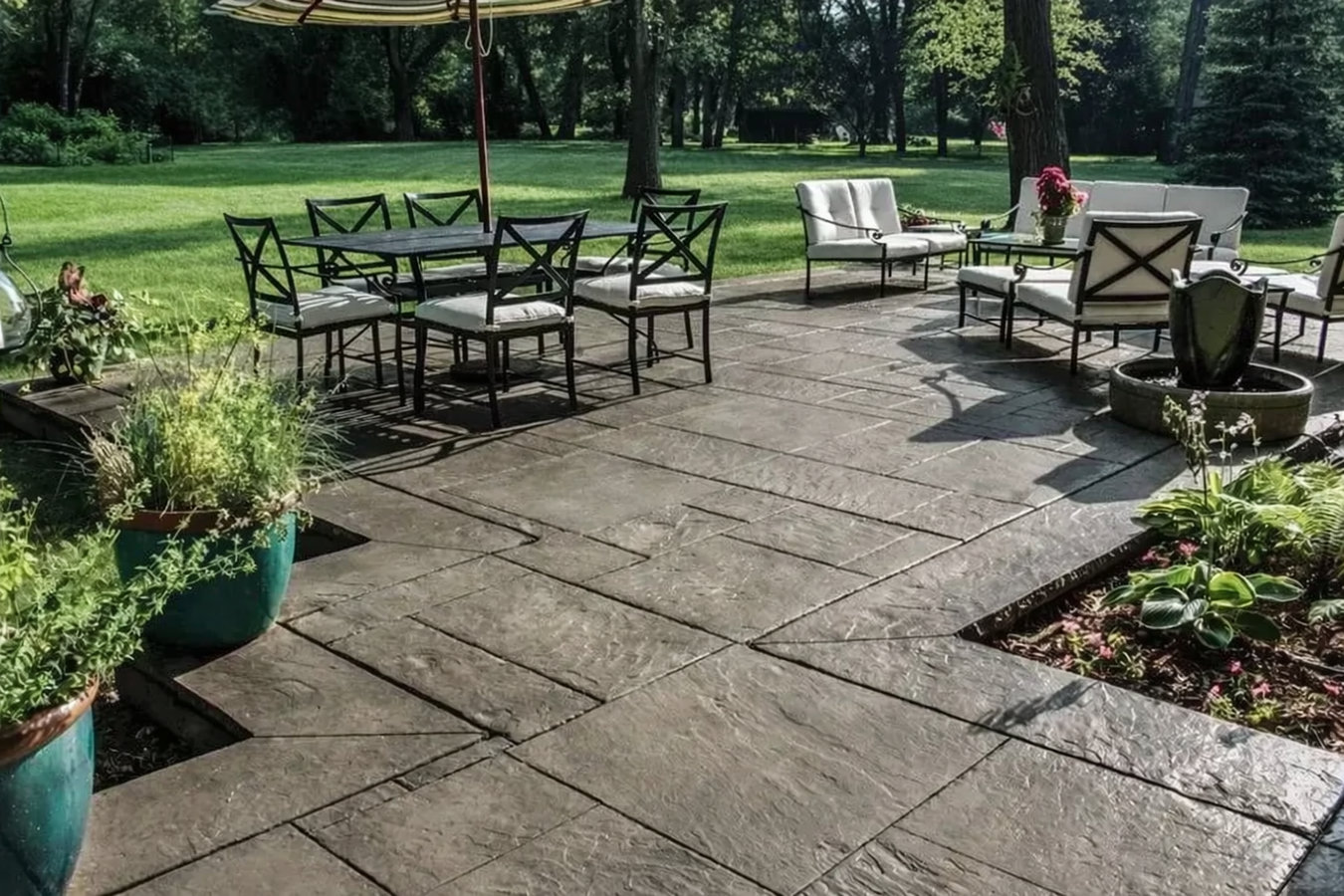
Plain concrete gets the job done, but it does nothing for the look of your property. Stamped concrete gives you the appearance of stone, brick, or slate at a fraction of the cost, with a surface built to handle Marin County weather for decades.
Stamped concrete services in San Rafael create decorative, durable surfaces by pressing patterns into freshly poured concrete before it sets. Most residential driveways and patios take one to three days of active work, with a full curing period of about four weeks before the surface is ready for vehicles.
If you have a plain concrete patio that has seen better days or a front walkway that clashes with your landscaping, stamped concrete is worth a serious look. It pairs well with a concrete patio construction project if you are starting from scratch.
Stamped concrete works on driveways, patios, pool decks, front walkways, and side-yard paths. It costs more than plain concrete upfront because of the extra labor and materials involved in the stamping and coloring process, but it costs significantly less than natural stone or pavers while delivering a similar visual result. For San Rafael homeowners with HOA design requirements or hillside properties where matching the home's aesthetic matters, the design flexibility is a real advantage.
If you can see cracks running across your driveway or patio, or if sections have lifted so there is a noticeable step between slabs, the surface has likely been compromised by soil movement underneath. In San Rafael's clay-heavy soils, this kind of shifting is common and tends to get worse over time, not better.
A patio or front walkway that is plain gray, stained, or visually tired is dragging down the first impression your home makes. San Rafael's real estate market is competitive, and outdoor spaces carry real value - a well-done stamped concrete surface can meaningfully improve curb appeal.
Many San Rafael homeowners with older wood decks are choosing stamped concrete as part of fire-hardening their property. If your deck shows rot or is made of materials no longer recommended in fire-risk areas, stamped concrete is a durable, low-maintenance alternative.
Standing water on your patio or driveway after San Rafael's winter rains means the surface either was not graded correctly or has settled unevenly. Pooling water accelerates surface wear and can direct water toward your foundation. A new installation includes proper grading to move water away from your home.
San Rafael Concrete handles stamped concrete installations across the full range of residential applications. Most homeowners start with a driveway or patio, but the same process applies anywhere you would pour a standard concrete slab and want something that looks more finished.
For outdoor entertaining areas, stamped concrete pairs naturally with decorative concrete techniques like exposed aggregate or color wash, which can be combined on the same project to create distinct zones. Pool surround projects benefit from this as well - we regularly tie stamped deck areas into the work when we handle concrete pool decks.
Pattern selection is where most homeowners spend the most time. Slate and flagstone patterns are consistently popular in San Rafael because they complement the natural stone and stucco homes common in neighborhoods like Dominican and Terra Linda. Cobblestone and brick patterns work well on front driveways and entry walks. Color is applied both in the concrete mix and through a concrete stamping release agent, creating depth and contrast that makes the surface look like natural material.
Every installation includes proper base preparation for Marin County clay soil, control joints to manage seasonal movement, and a sealer coat to protect color and surface texture from San Rafael's wet winters. Permits are handled by us - you do not need to navigate the city's permit process yourself.
Best suited to homeowners replacing plain or failing concrete who want improved curb appeal.
Ideal for outdoor entertaining spaces where the visual design matters as much as durability.
A high-impact option for improving the first impression of your home's entrance.
Slip-resistant textures and non-combustible material make this a smart pool deck choice.
Brings a finished look to utility areas without the cost of natural stone.
San Rafael's combination of clay-heavy soil, wet winters, and active real estate market makes stamped concrete a practical choice for homeowners who want a surface that looks good and holds up. Most of Marin County sits on expansive clay soil that swells when it absorbs water and contracts in dry summers - the kind of movement that cracks poorly prepared concrete within a few years. A properly built stamped concrete installation accounts for this with a deep gravel base and reinforcement suited to local soil conditions.
The rainy season - roughly November through March - is the main scheduling constraint. Concrete needs dry, moderate weather to cure properly, so most of our stamped concrete work runs from April through October. Homeowners who plan their projects in late winter and get on a contractor's schedule early are consistently the ones who get the timing right.
Many of San Rafael's neighborhoods - including Novato and communities throughout Petaluma - have active HOAs with design review requirements. Stamped concrete's pattern and color flexibility makes it easier to meet those requirements than plain concrete or standard pavers. We are familiar with the documentation HOAs typically need and can help you put that together before work starts.
For homeowners in the city's hillside neighborhoods near Dominican University or above Fourth Street, stamped concrete also serves as a non-combustible replacement for wood decking - a meaningful consideration given the fire hazard zones that cover much of San Rafael's eastern and northern hills.
Call or submit the form and we respond within 1 business day. We will ask a few basic questions about the area, what you have now, and any pattern ideas you are considering.
We visit your property, check soil conditions and drainage, and walk through pattern and color samples together. The cost estimate we give you after this visit covers everything - base prep, permit, color, and sealing.
We handle the City of San Rafael permit application. This typically takes one to two weeks. Once it is in hand, you get a confirmed start date and can arrange alternative parking if needed.
The crew removes existing material, prepares the base, pours and stamps the concrete, and applies sealer once cured. After the city inspection passes, you get a walkthrough and written care instructions.
We respond within 1 business day. There is no obligation to move forward after your estimate. Once you submit, someone from our office will call you to schedule a free on-site visit where we measure the area, review pattern options, and give you a written quote that covers every line item.
(628) 234-2248We hold the California Contractors State License Board C-8 Concrete license required to perform this work legally. You can verify our license number in two minutes at the CSLB website. Licensed contractors carry insurance, which protects your property if something goes wrong.
From San Rafael and Novato to Petaluma, Napa, and beyond, we have worked on residential concrete projects throughout the North Bay region since 2022. That means we know the soil conditions, permit offices, and HOA requirements in your specific area.
Many contractors charge more to handle Marin County's expansive clay soil properly. We build that preparation into every estimate from the start - deeper subgrade removal, compacted gravel base, and appropriate reinforcement - because skipping it leads to cracks and callbacks.
We pull every required permit and schedule the city inspection ourselves. Working without a permit can complicate a home sale and leave you without legal recourse if workmanship problems appear later. Every stamped concrete project we complete is fully above-board. Learn more at the{' '} California Contractors State License Board.
Stamped concrete is a significant investment, and the quality of the finished surface depends almost entirely on what happens before the first shovel hits the ground. The California Contractors State License Board recommends verifying any contractor's license before signing a contract - and we encourage you to do the same with us. Proper licensing, insurance, and permit compliance are the foundation that protects your home and your investment.
Exposed aggregate, color wash, and other finishing techniques that can be combined with stamped patterns on the same project.
Learn moreFull patio builds from ground up - including forming, base preparation, and finishing - where stamped concrete is a natural upgrade option.
Learn moreSpring and summer slots fill quickly in San Rafael - reach out now to secure your place in the schedule before the busy season is fully booked.